
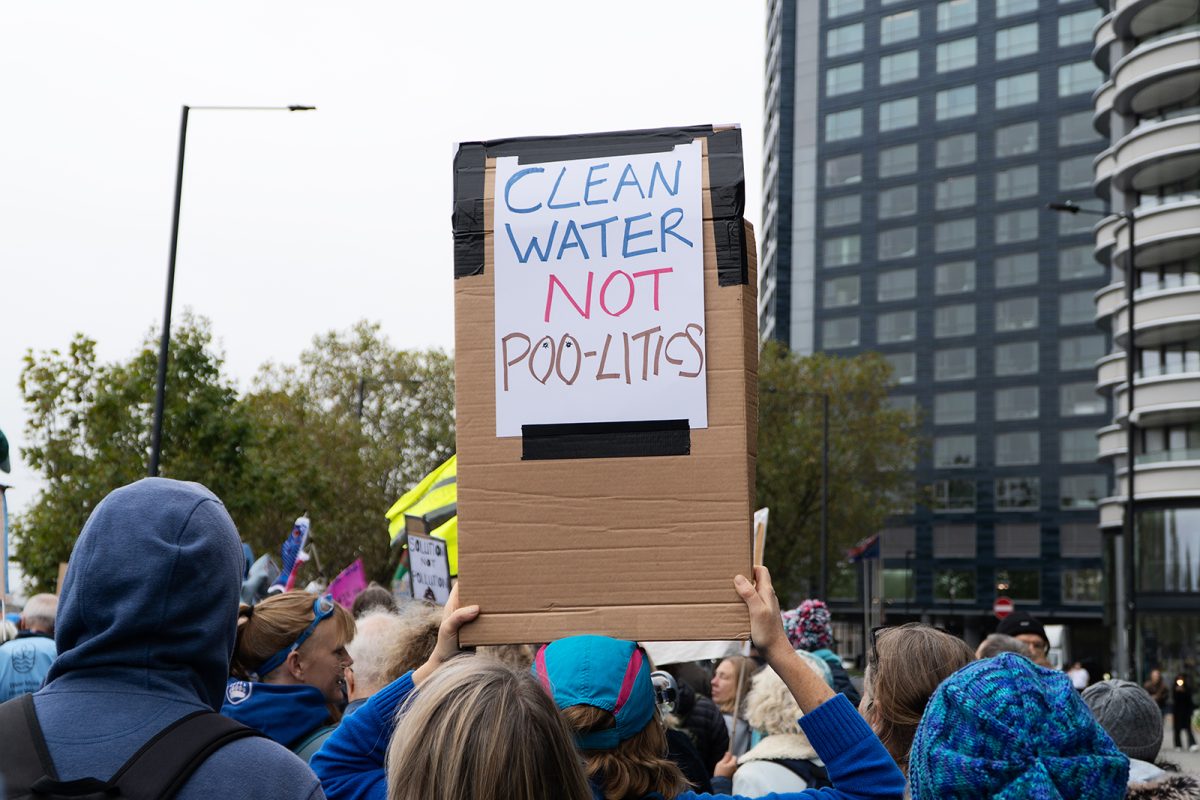
London’s rivers are in crisis. I’m sure that’ll come to no surprise to you, especially if you joined us and 15,000 other Londers to March for Clean Water back in November. Pollution, mismanaged infrastructure, and a lack of enforcement are allowing raw sewage to flow directly into our waterways. Being a National Park City isn’t an award. It’s a commitment to the half of London that isn’t yet green, healthy, and wild. That includes the growing environmental disaster that is London’s rivers. .
As our city struggles with more extreme rainfall and urban flooding, our ability to absorb water naturally is disappearing. Last week, I wrote an article on the importance of front gardens, highlighting how the loss of green space is worsening both flooding and pollution. This feels like a natural second part to a potential endless series, but it is directly linked to our sewage crisis.
When we pave over gardens and green spaces, rainwater that once soaked into the ground is now funnelled into storm drains—forcing more sewage into rivers.
This article is inspired by a recent CPRE London webinar on London’s Sewage Crisis. Head of Campaigns Alice Roberts was joined by three expert speakers—Theo Thomas (London Waterkeeper), Ben Morris (Clean Up the River Brent), and Lewis Elms (Environment Agency). They exposed the shocking reality of London’s sewage system but also provided solutions and ways for all of us to take action.
How London’s Drainage System Works (And Why It’s Failing Us)
London’s sewage and drainage system is outdated, overwhelmed, and often misunderstood. Many assume sewage treatment plants handle all of London’s waste, but the reality is much more complex.
Theo Thomas explains:
“The system differs across London. In the inner city, we have a combined sewer system, where rainwater and sewage flow into the same pipes and go to treatment plants. In outer London, the system is separate—sewage goes to treatment plants, but rainwater drains straight into rivers.”
🔹 The problem? Misconnections—when household sewage (from toilets, washing machines, and sinks) is mistakenly plumbed into the rainwater drainage system—are sending untreated waste straight into rivers.
Lewis Elms from the Environment Agency highlights the scale of the issue:
“Misconnections are a massive problem, particularly in outer London. A single misconnected pipe might not seem like a big deal, but when you multiply that across thousands of homes, it adds up to a significant amount of sewage entering rivers every single day.”
To make matters worse, a third of London’s sewer network is unmapped, making it difficult to track where these misconnections are happening.
The Myth of the Super Sewer: Why It’s Not Enough
For years, the Thames Tideway Tunnel (or ‘Super Sewer’) has been promoted as the solution to London’s sewage crisis. Costing nearly £5 billion, this massive underground tunnel is designed to capture and store sewage overflows from central London before treatment.
But as Theo Thomas warns, it’s not a complete fix:
“The Tideway Tunnel is only dealing with the sewer overflows in central London. It won’t help in outer London, where misconnections, road runoff, and overflows from separate sewers are still polluting rivers.”
📍 Key Fact: 40% of London’s sewage overflows used to come from a single point—Abbey Mills pumping station. That’s been reduced thanks to new storm tanks, but problems persist elsewhere.
Sewage Spills and Flooding: Why the Problem Is Getting Worse
London’s growing urban sprawl has significantly reduced the city’s ability to absorb rainwater naturally.
Theo explains:
“In the Victorian era, London was much more permeable. Gardens, green spaces, and soil absorbed rainwater. Now, we’ve paved over 22 times the size of Hyde Park, forcing more water into the sewer system and increasing overflows.”
This means:
🚨 More flash flooding in streets and homes.
🚨 More untreated sewage overflows into rivers.
🚨 More environmental damage—oxygen depletion, fish kills, and toxic pollution in waterways.
Instead of relying on expensive concrete storage tanks, London must follow the example of cities like Philadelphia, which is using green infrastructure to reduce flooding. More green roofs, rain gardens, and tree pits could soak up stormwater before it reaches the drains.
Regulation Failure: Who Is Responsible?
Under UK law, local councils are responsible for fixing misconnections, but as Lewis Elms from the Environment Agency points out:
“Even when councils have the power to act, many cases remain unresolved for years. There simply isn’t enough enforcement happening.”
💡 Did you know?
- Thames Water identifies many misconnections but can’t force repairs—that’s the council’s job.
- Only 60-70% of property owners voluntarily fix misconnections—down from 90% in previous years.
- Some entire housing developments have been built with their sewage systems plumbed incorrectly into rainwater drains, sending human waste straight into rivers.
Ben Morris, a volunteer activist, shares his frustration:
“We found new blocks of flats—seven entire buildings—where every single toilet was plumbed into the rainwater system. This isn’t just old infrastructure failing; it’s new developments actively making the problem worse.”
🔹 Enforcement must be stronger. Councils need more resources, and the Mayor of London must step in to coordinate efforts citywide.
What Can Be Done? Solutions for a Cleaner, Healthier London
The panel agreed on a clear set of solutions to fix London’s sewage crisis:
1. Fix Misconnections
✅ Better enforcement: Local councils must take responsibility and act faster.
✅ Public awareness: Many property owners don’t realise their homes are misconnected.
✅ Support for low-income households: Subsidised repair schemes could increase compliance.
2. Invest in Green Infrastructure
✅ Expand rain gardens, green roofs, and permeable paving.
✅ Encourage homeowners to de-pave driveways and use water-absorbing plants.
✅ Require new developments to include sustainable drainage solutions.
3. Increase Transparency & Monitoring
✅ Publish real-time data on sewage spills.
✅ Create a public-facing pollution map to track outfalls and report problems.
✅ Pressure Thames Water and regulators to be more accountable.
4. Push for Policy Changes
✅ Demand the formation of a ‘Sewer Connections Action Team’ to coordinate enforcement across London’s boroughs.
✅ Strengthen building regulations to ensure new developments don’t add to the problem.
✅ Hold water companies accountable—profits should fund improvements, not shareholder payouts.
How You Can Help
London’s rivers belong to all of us, and we have the power to demand change. Here’s what you can do:
📢 Take Action Now!
✉️ Email Mayor Sadiq Khan at mayor@london.gov.uk to support the creation of a Sewer Connections Action Team. Here’s the letter CPRE London have already sent.
📞 Report Pollution Incidents:
- Environment Agency: 0800 80 70 60
- Thames Water Pollution Hotline: 0800 316 9800
🚀 Join the movement!
- Volunteer with Thames21, Friends of the Thames, or your local river group.
- Take part in Outfall Safaris to map and report pollution sources.
- Reduce pollution at home—use eco-friendly cleaning products and never flush wet wipes.
Presentation Resouces
- Alice Roberts (CPRE London) – Overview of London’s sewage and drainage systems Jan 2025
- Theo Thomas (London Waterkeeper) London Waterkeeper Presentation Jan 25
- Ben Morris (River Guardian, Founder of CURB, Clean Up the River Brent), Trustee of Brent River Park) Ben Morris CURB 23 Jan 2025
- Lewis Elmes (Catchment Co-ordinator Brent – Crane at Environment Agency) Lewis Elmes Environment Agency presentation 23 Jan 2025 – Misconnections Regulatory Framework
- Tideway Factsheet Sep 2024 from Tideway

